

Mezzotint: Painting with Darkness
Baldur and the Mistletoe mezzotint by Paul Butler
Baldur, most beloved of the Norse Gods, is slain by a dart made of Mistletoe. His brother Loki, the shapeshifter-trickster, forms a sharp dart from Mistletoe and tricks his other brother Hödr to throw the dart and kill Baldur. This is the trigger leading to Ragnarok. Loki seen as a fly.
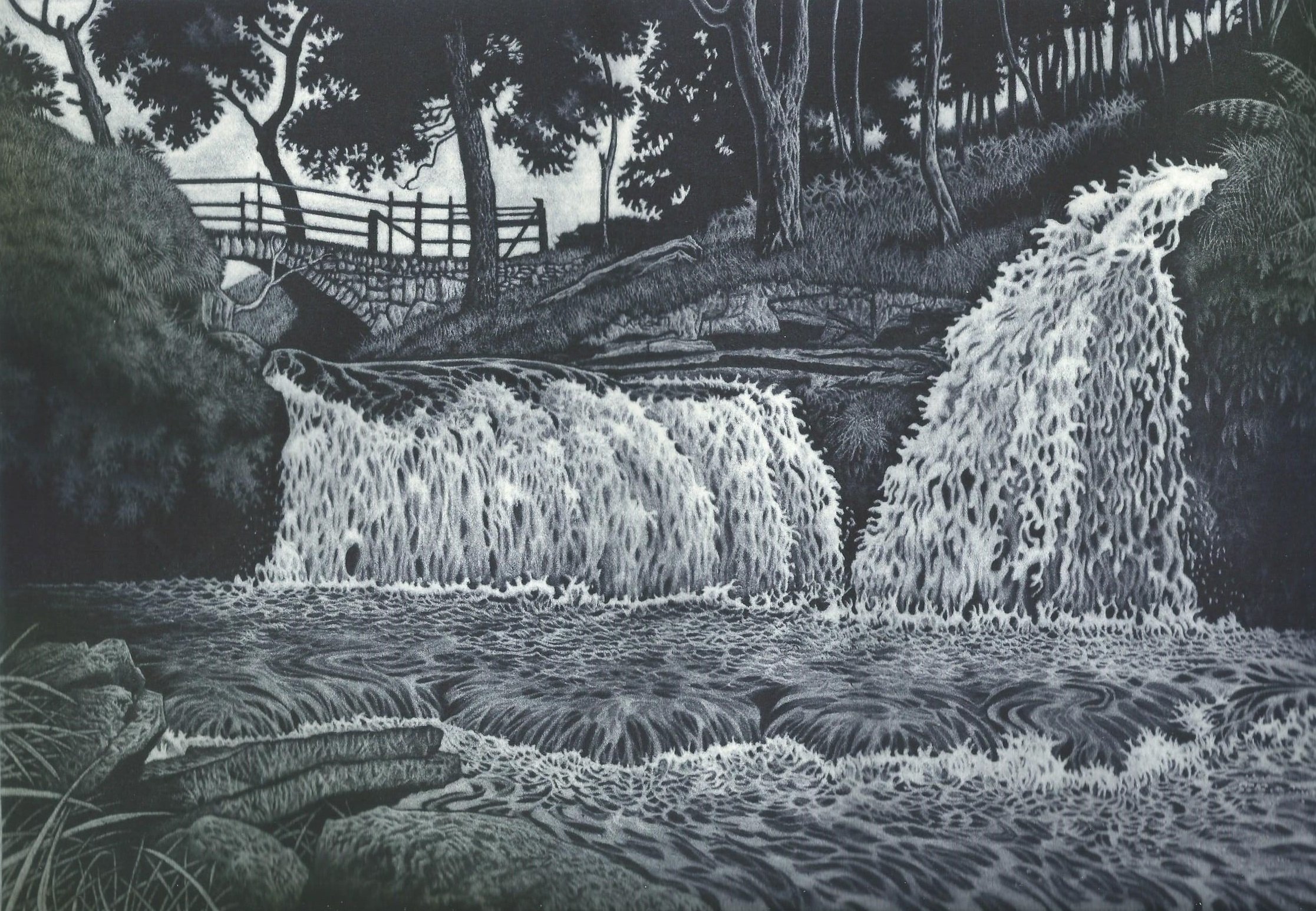
Where Seven Streams Fall mezzotint by Stuart Brocklehurst
Introduction
Mezzotint, from the Italian mezza tinta meaning half tone, is one of the most atmospheric and distinctive printmaking methods in the history of intaglio. Known for its seamless tonal transitions, deep velvety blacks, and painterly softness, the method once dominated eighteenth-century print reproduction, particularly portraiture, before the arrival of photography.
Elizabeth E. Barker summarises the essence of the technique beautifully:
“A mezzotint emerges out of the darkness into the light.” (The Printed Image in the West: Mezzotint)
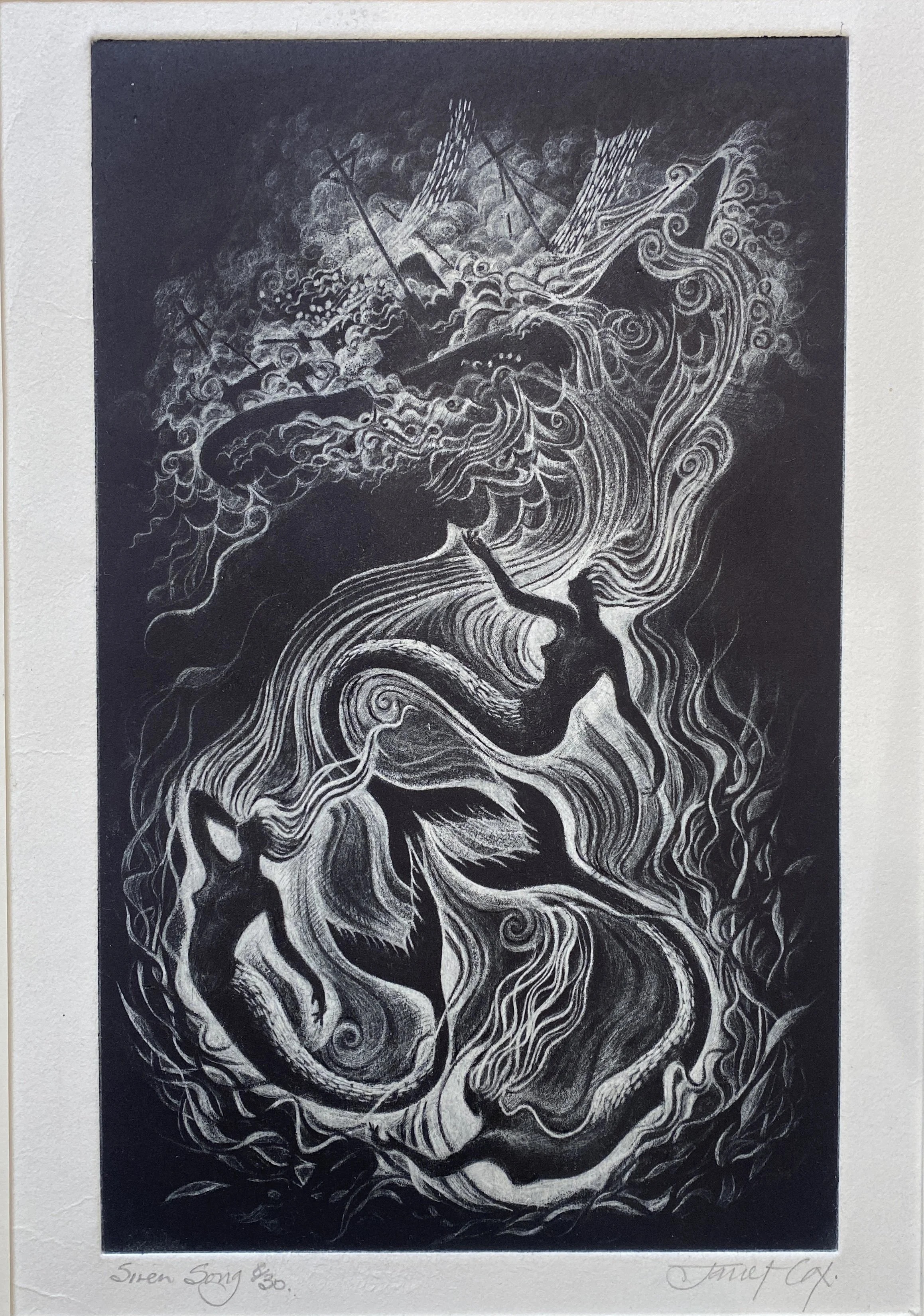
Siren Song, mezzotint by Janet Cox
The Technique: Working from Darkness to Light
Unlike engraving or etching, mezzotint is a drypoint tonal method. It does not depend on lines or chemical etching, but instead uses the physical surface texture of a copper (or steel) plate to create tone.
Stage One: Preparing the Ground
The artist uses a serrated tool known as a rocker or cradle, which is rocked repeatedly and methodically across the plate. This action raises thousands of tiny burrs and pits that act as reservoirs for ink.
If printed at this point, the plate would produce a field of pure, velvety black. An earlier variation of this process used a roulette, a small toothed wheel that punctured the surface. Today, some artists also roughen plates using carborundum stone.
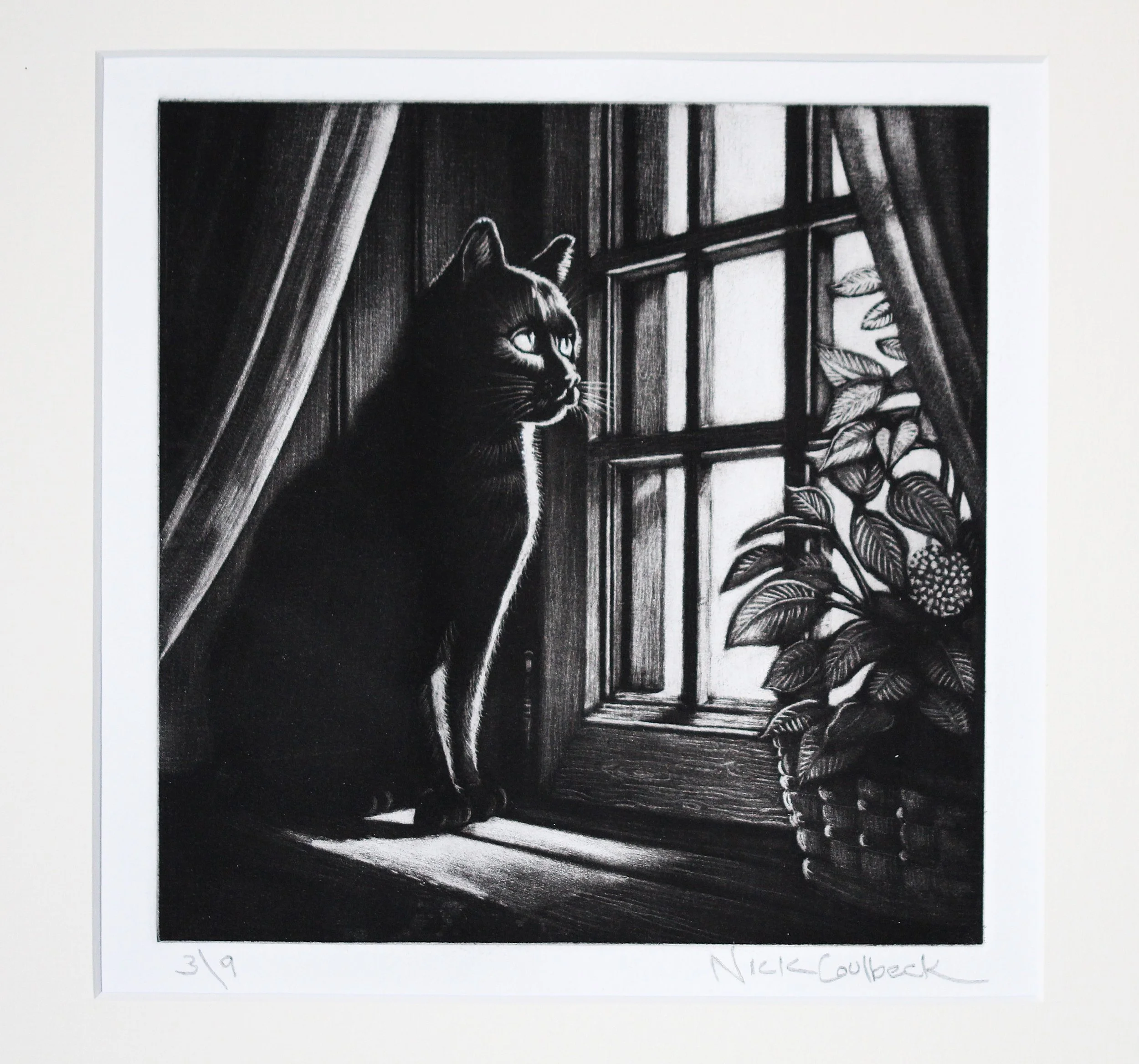
What can I see, mezzotint by Nick Coulbeck
Stage Two: Creating the Image
With the dark base established, the artist then begins the act of removing darkness using: a scraper, a burnisher and sometimes supplementary engraving tools. The burr is gradually smoothed and polished. The smoother an area becomes, the less ink it holds, producing transitions from deep shadow, through mid-tone, to the brightest highlights. William Hogarth captured this reversal of traditional artistic logic in 1753:
“The copper-plate … is first wrought to print one even black, like night: and the whole work afterwards is merely introducing the lights into it.” (The Analysis of Beauty).
In French, mezzotint is known as la manière noire — the dark manner — a reference not only to process but to aesthetic character.
Tools and Materials
Traditional mezzotint requires only a few essential tools and materials: copper or steel plate, rocker or roulette, scraper and burnisher, ink and an intaglio press.
Because the burr is delicate and flattens over repeated printing, a mezzotint plate typically yields a relatively small number of high-quality impressions. Early prints are the richest and most highly valued.

Hawthorn printmakers intaglio press
A Sustainable Printmaking Method
Modern practitioners value mezzotint not only for its tonal richness, but also for its environmental benefits. Printmaker Martin Maywood of The Ropewalk, Barton-Upon-Humber, notes:
“Using no chemicals, mezzotint engraving is a very green and environmentally friendly method of intaglio printmaking with the ability to render images in photographic detail with a full range of velvet tones.”
Contemporary Practice
Although labour-intensive, mezzotint remains an admired and relevant method. Artists today continue to refine the process and expand its expressive vocabulary. At Eastgate Studio, the work of Janet Cox, known for her gothic sensibilities and mastery of form and tone, is especially celebrated.
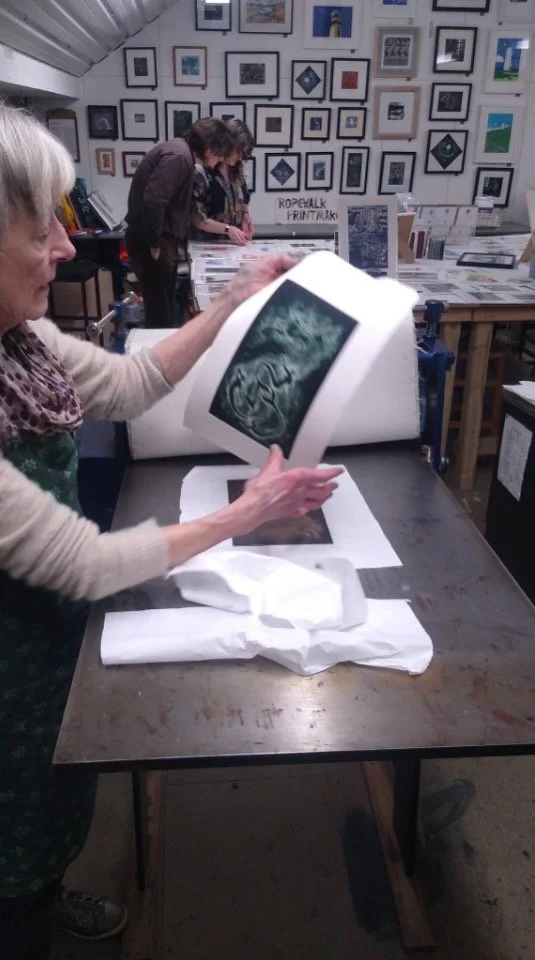
Janet Cox at The Ropework Workshop
Why Mezzotint Endures
Mezzotint remains one of the most expressive forms of intaglio printmaking. It offers: atmospheric depth, silken tonal gradation, a painterly quality unmatched by other printing methods. Its slow rhythm and physical craft encourage contemplation and technical discipline. Though no longer used for rapid reproduction, mezzotint holds a unique place in printmaking: a technique where shadow is shaped by hand, and the image appears gradually, like light emerging through mist.
Further Reading and Credits
Elizabeth E. Barker — The Printed Image in the West: Mezzotint
William Hogarth — The Analysis of Beauty (1753)

Linocut at Eastgate Studio
Robin Hood’s Bay from Boggle Hole, linocut print

Linocut mark making at Eastgate Studio
Ground floor studio: Albion Flatbed Press
First floor studio: Hawthorne Etching Press
Materials:
Lino or vinyl;
Oil based ink;
Flat inking surface;
Roller;
Palette knives.

Printmaking tools at Eastgate Studio
Process
Transfer reverse image to block;
Carve lino;
Roll ink onto inking surface using rubber brayer to a smooth velvety texture with a slight tacky sound;
Transfer ink to plate until same tacky sound can be heard;
Print using the Albion press;
If printing using the Hawthorne press, set the pressure to depth of the plate.
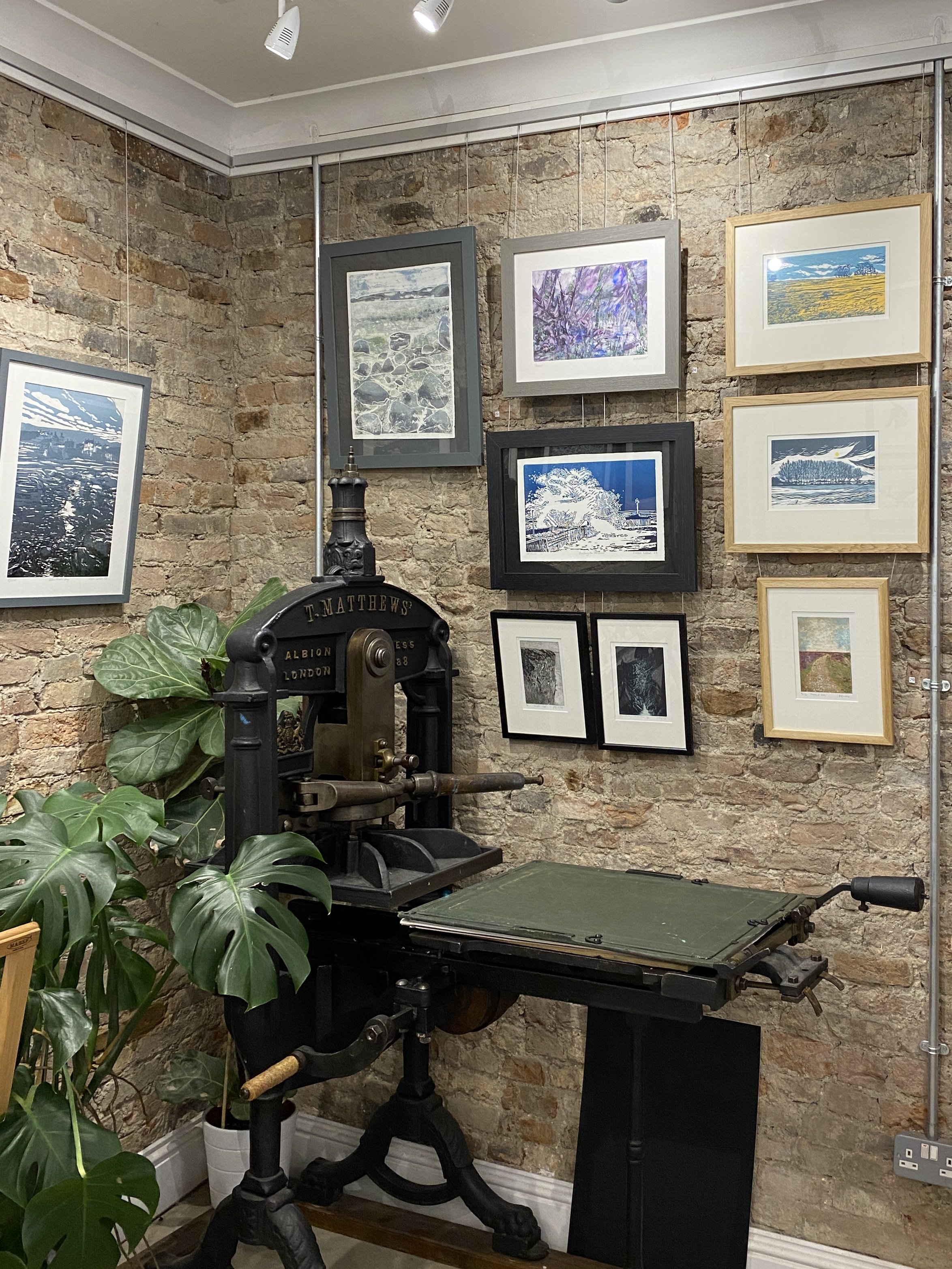
Albian flatbed press at Eastgate Studio
Tools and Materials
A range of cutting tools can be trialled at the studio. Please regularly hone the professional cutting tools during use. Susan will demonstrate on request. Paper, ink or a studio ink session can be purchased from the gallery shop or in advance through Eastgate Studio website click and collect.
V Tools and U Tools
U Tools carve soft lines with a curved end point and an even width.
V Tools can give a variety of line widths with the same tool and accurate edges and corners. Lines cut with V tools will have sharp pointed ends.
Knife and chisel can be used to create a straight line using a ruler.
Linocut mark making using U and V tools, a Japaneese chisel and a straight knife on hessian backed lino.
1 to 3. V tools: Straight cuts made using V Tools. V Tools carve deep lines with pointed ends where the tool has been dug into and pushed out of the lino.
4-6. U tools: U Tools carve lines that are uniform in width and have rounded ends.
7. U tool: Hold a U Tool straight whilst the lino is wobbled from side to side.
8. U Tool: Create circles by rotating the lino as the tool stays still.
9. U tool: Small dots by holding the tool in the same place and rotating the lino.
10. Flat knife and Japanese chisel: Cut a straight line using a knife and ruler then push the Japanese Chisel towards the line and flick off to create sharp edges.
11-12. U and V Tool with snap off. On traditional grey lino you can create edges by flicking the tool upwards to snap off the piece of lino.
13. Clean around a positive shape with U Tools. Carve edge of rectangle with small U.
14. Japanese chisel in a square to get sharp edges then push the tool down and skim off the surface.
15. U tool: Create positive lines by leaving raised lino lines.
16. Shallow U tool: To remove raised lines in lino after cleaning around a positive shape.
17. V tool. to create lines that vary in width with tapered ends.
18. V tool. Arrow shape using short cut and snap off.
19. V tool corners. Corners using two cuts and snap off with the V tool.
20. Small V tool: Cross hatching to carve delicate lines and create tone or texture.

Still
Image “Still” linocut by Daz Cooper
An exhibition of print by Eastgate Studio Members
Saturday 25th February to Saturday 1st April 2023.

Still Life linocut print by Nathalie North
The idea came from a discussion around the stillness of winter but also the cultural tradition of the “still life”. We’re sure you have prints in your collection on the theme. Or maybe produce some new prints influenced by winter tranquility.

Winter Moon collagraph print by Susan Leeson
Get your prints to Eastgate Studio by Wednesday 22nd February and collect after 4th April 2023.

Ancient Yorkshire
High Hunsley linocut by Emma Garness.j
An open exhibition of print at Eastgate Studio
To take place during the National Trust Heritage Open Days Friday 8th September to Sunday 17th September 2023
The exhibition will then continue at Eastgate Studio until Saturday 21st October 2023
What comes to mind when you think of “Ancient Yorkshire”?
Our stunning town of Beverley grew up around the minster church. The minster’s origins lie in the monastery founded around 700 AD by Saint John of Beverley. As well as the minster there are a number of other historic features in Beverley including Beverley Westwood’s first recorded in the twelfth century.
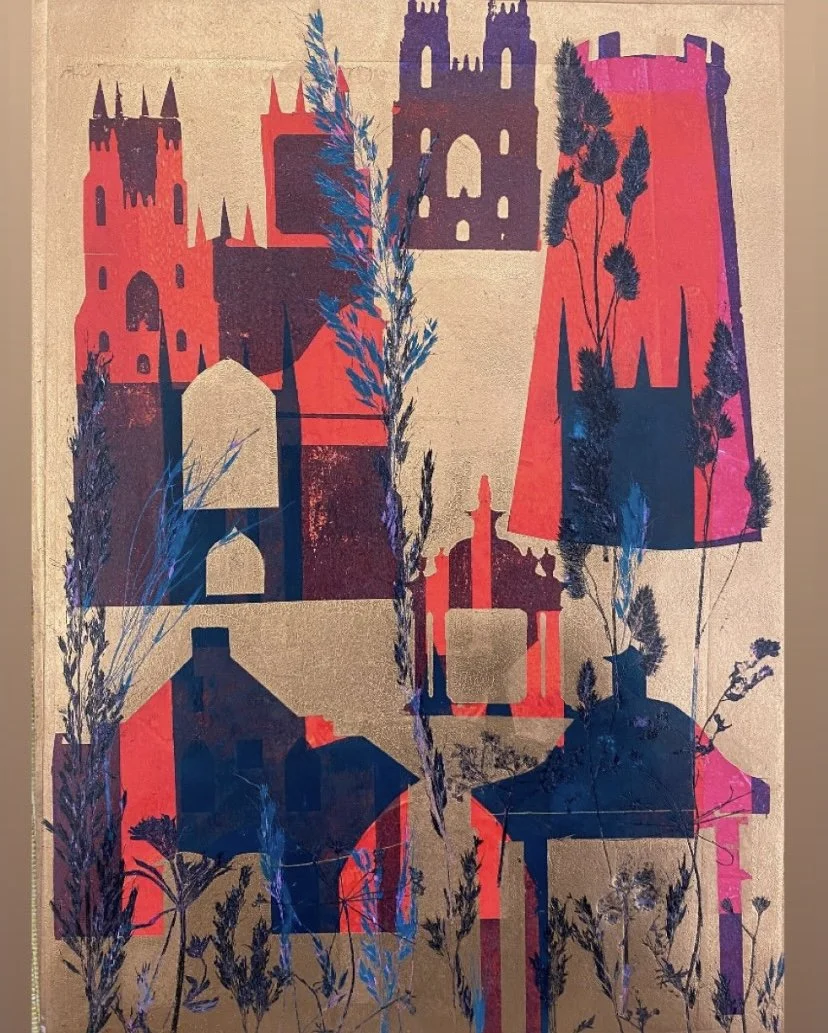
“Sanctuary Town” stencil print with botanicals by Susan Leeson
Then of course there’s the city of Hull, developed from a settlement called “Wyke”, a creek where the River Hull enters the River Humber. The word Wyke originated from the Scandinavian word “vik” meaning a creek. Apart from Hull’s many historic buildings and streets, Hull’s museums quarter also offers an insight into East Yorkshires local history.
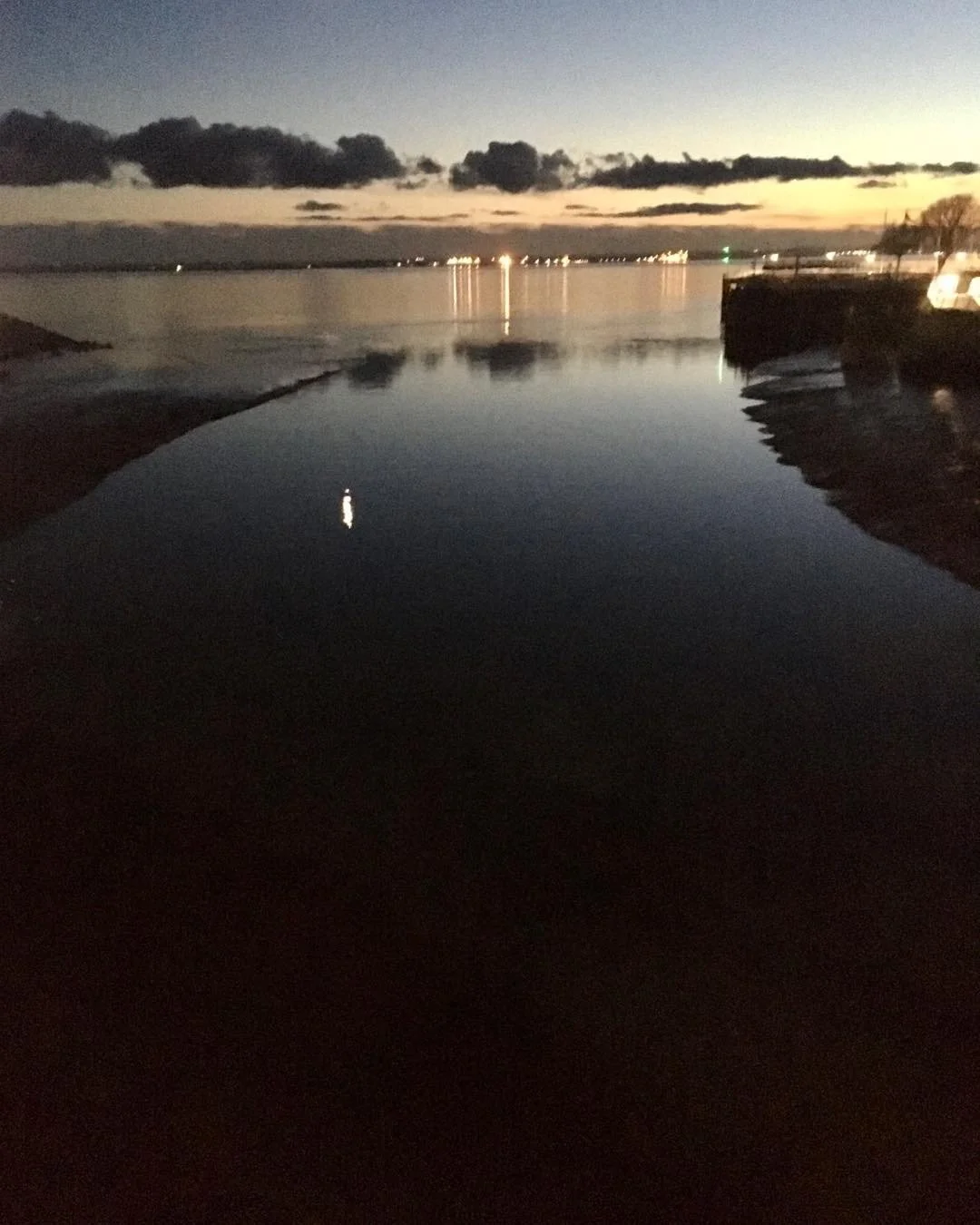
The confluence of the River Hull and the Humber estuary image by Susan Leeson
There are many historic villages and towns within East Yorkshire. Maybe consider Skidby Mill and its original surrounding outbuildings.
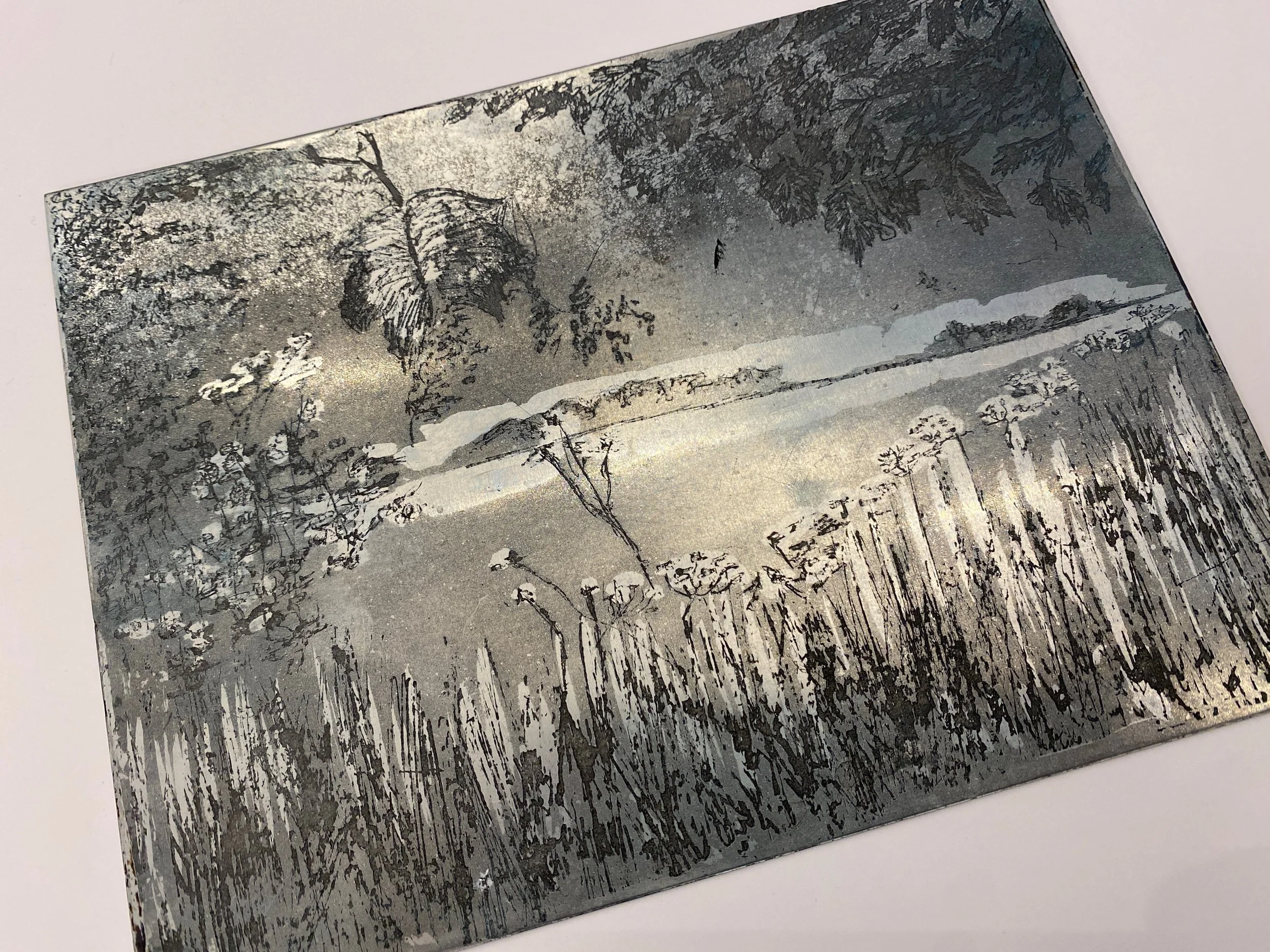
Yorkshire Wolds acid etched plate by Susan Leeson
Or the deserted medieval village of Warren Percy, continuously occupied for six centuries before it was abandoned soon after 1500.
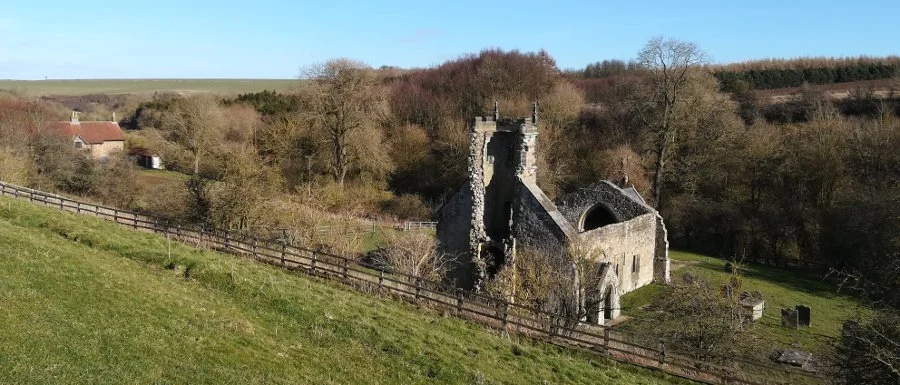
Warren Percy image BBC News
The remains of Skipsea Castle, a great mound, 85 metres in diameter and 13 metres high. The mound has been identified as an Iron Age earthwork.
Whilst Rudston Monolith, the tallest standing stone in Britain is a slender pillar set in the ground of Rudston’s parish church… well worth considering!
There’s Danes Dyke, the Iron Age bank and ditch earthwork 'wall' intended as a defensive structure to protect headland settlements.
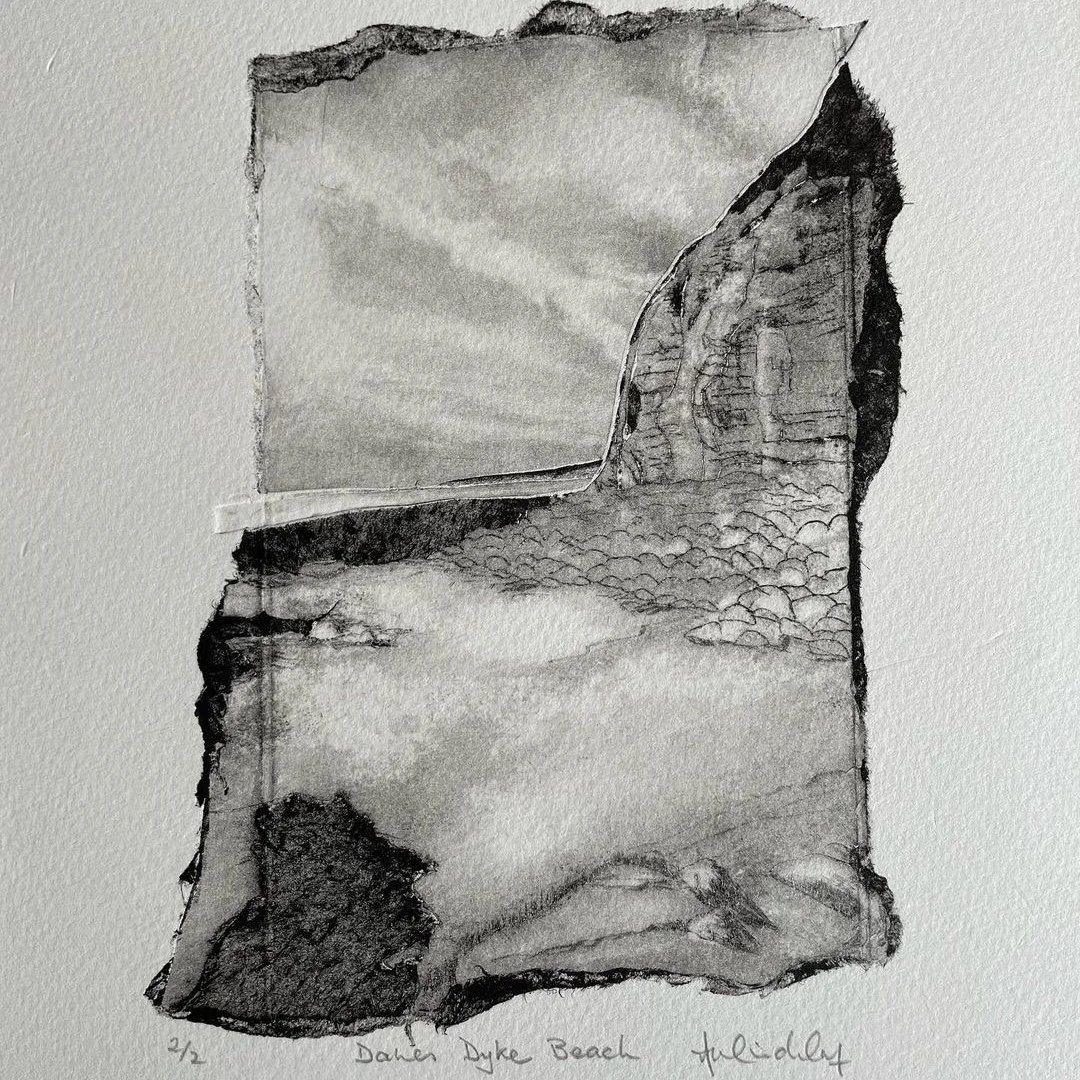
“Danes Dyke Beach” tetrapak print by Angela Lindsley
East Yorkshire’s amazing East Coast has a vast history to plunge for your source material. For example, Flamborough was the home of the Vikings from AD 800 . The Vikings captured York in 866 and founded the Kingdom of Yorkshire.
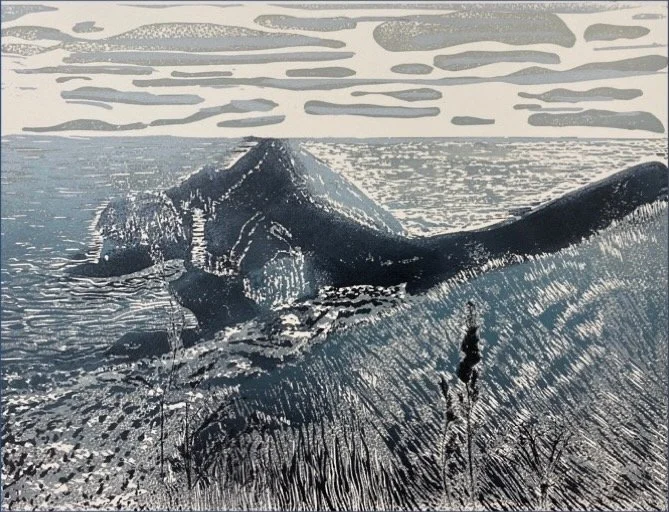
“The Drinking Dinosaur” linocut by Susan Leeson
Close to Flamborough is pre-Roman Bridlington, recorded as Burtlingetune in the Domesday Book of 1086 and an important port during the Middle Ages. The coastal area offers rich pickings for your project as does the old town, home of the Bayle Museum. The museum is set within the 12th century stonework of the Bayle Gate which once served as a gatehouse to a Norman castle, and later to the 14th century Bridlington Priory.
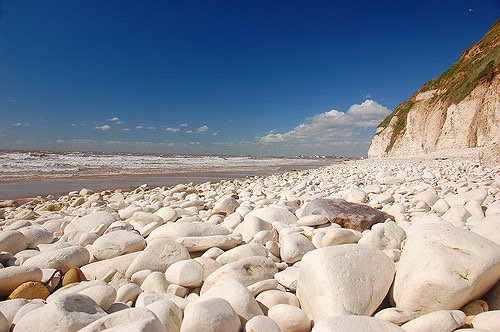
Bridlington Beach image by Susan Leeson
The stately homes of East Yorkshire offer so much for the project. Midway between Driffield and Bridlington is Burton Agnes Hall the Elizabethan stately home, whilst Burton Constable Hall is around 20 miles South and nearer to the City of Hull. The Hall is a Grade I listed building set in a 300 acre park designed by Capability Brown.

Burton Constable Hall Dam-Cum-Bridge linocut print by Susan Leeson
We’ll be hanging the exhibition on Wednesday 6th September 2023 so plenty of time to create your plate and pull your prints.
Looking forward to seeing your response to the theme!
Susan

“Less is More” Eastgate Studio Open Exhibition
Summertime at Eastgate Studio
Less is More: Eastgate Studio Open Exhibition : Saturday 29th October to Saturday 14th January.
Complete our online form to exhibit at our final exhibition of the year.
Dust off your protractors, set squares, rulers and compasses to create geometric analogue prints with a modernist theme. Think “Bauhaus”, the European art movement of the 1920s and 30s featuring a geometric, abstract style, without reference to the material world. With an emphasis on function, prints feature flat planes with overlapping shapes, bold typography, blocks of colour and clean lines. Looking forward to receiving your applications.
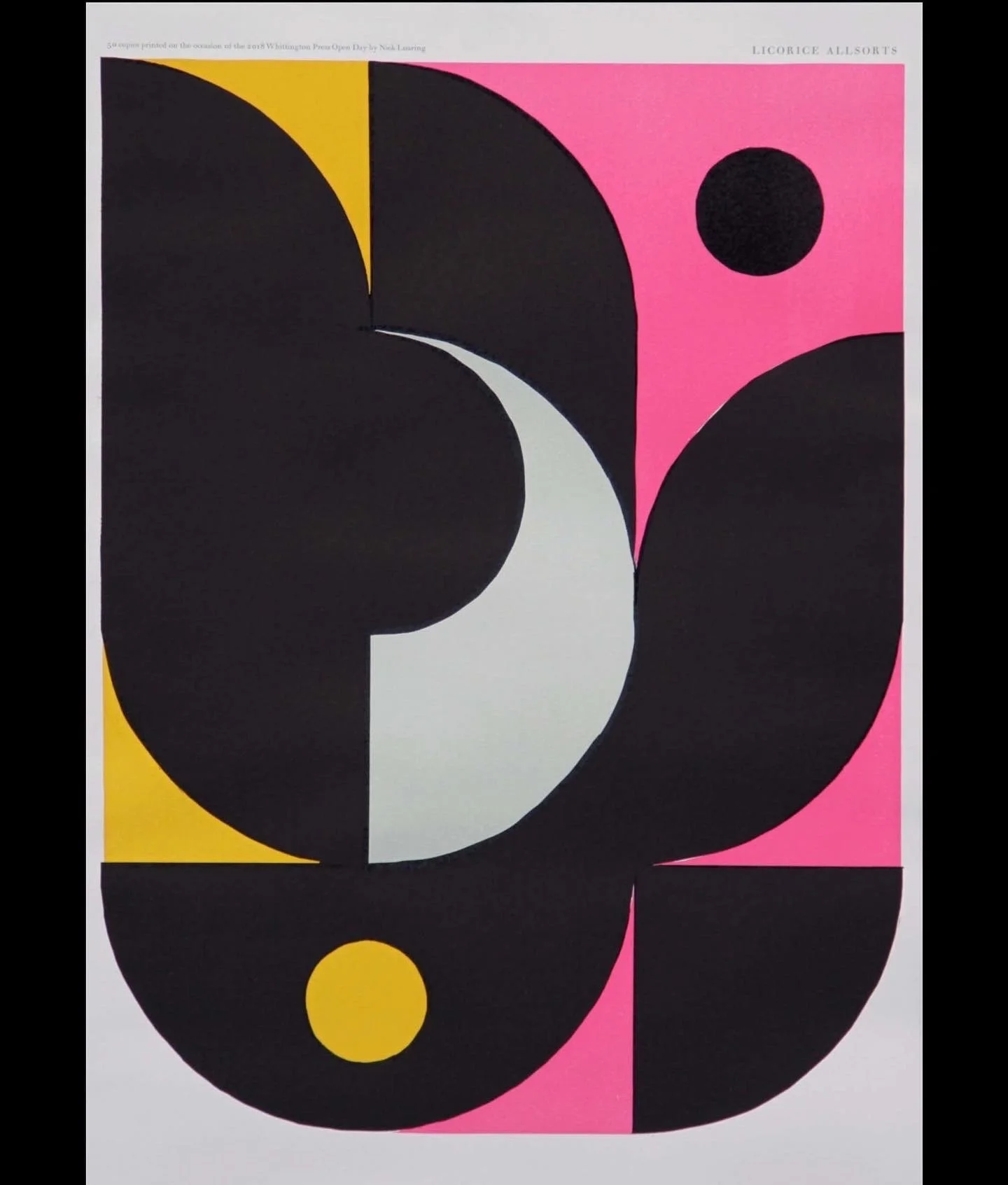
“Less is More” Eastgate Studio Open Exhibition October 2022. Image “Liquorice” By Nick Loaring of The Print Project
Open Exhibition Terms and Conditions of Entry
Eligibility
All artists are eligible to enter, whether amateur, student, semi-professional and/or graduate, professional or established.
All entrants must live or be professionally based in the UK.
Applicants must be age 16 or over.
We only accept submissions that have been created by the applicant.
Copies of artworks may be acceptable but potential purchasers must be informed if a work is a copy or derived from published sources. Please indicate clearly in the ‘Further Information’ section on the submission form that the work is a copy and what source has been used.
Final date for submissions Sunday 16th October.
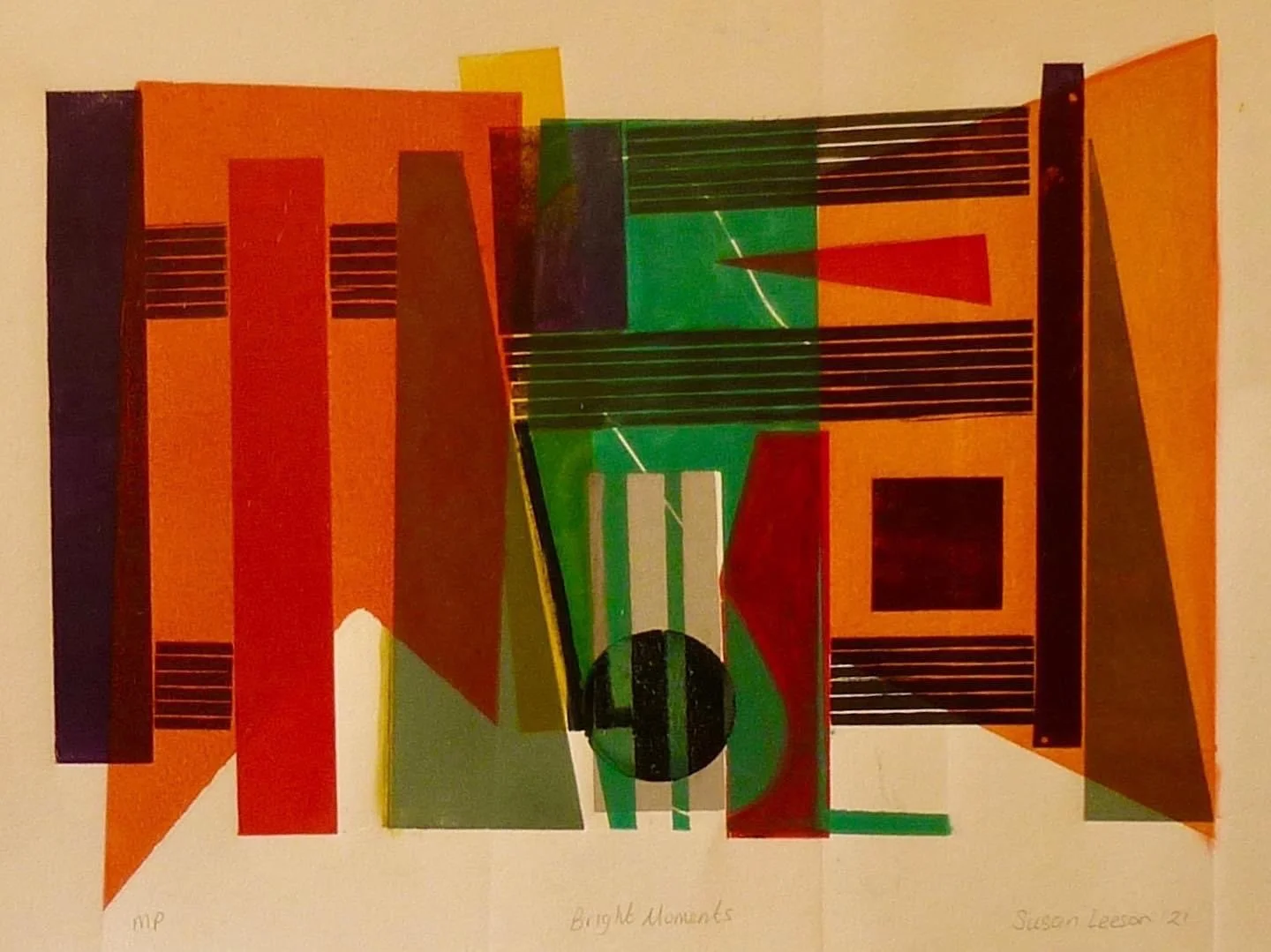
“Bright Moments” Block Linocut Print by Susan Leeson
Submissions
To enter artwork for the Eastgate Studio Open Print Exhibition, all artists must submit their entries by email to eastgateprintstudio@gmail.com. Artwork must not be delivered to Eastgate Studio for consideration.
You will need a valid email address and a digital image in Jpeg format, at least 1000px wide of your prints(s) in order to submit.
If you have an ‘artist name’ that is different to the name on your bank account please let the Gallery know.
You are advised to arrange your own insurance for any artwork submissions.
Up to 5 framed and 5 unframed prints will be accepted per artist.
Eastgate Gallery will select prints for the opening displays and additional prints to replace any sales over the exhibition period.
When we receive your email application, you will be sent an email reply with an application reference.
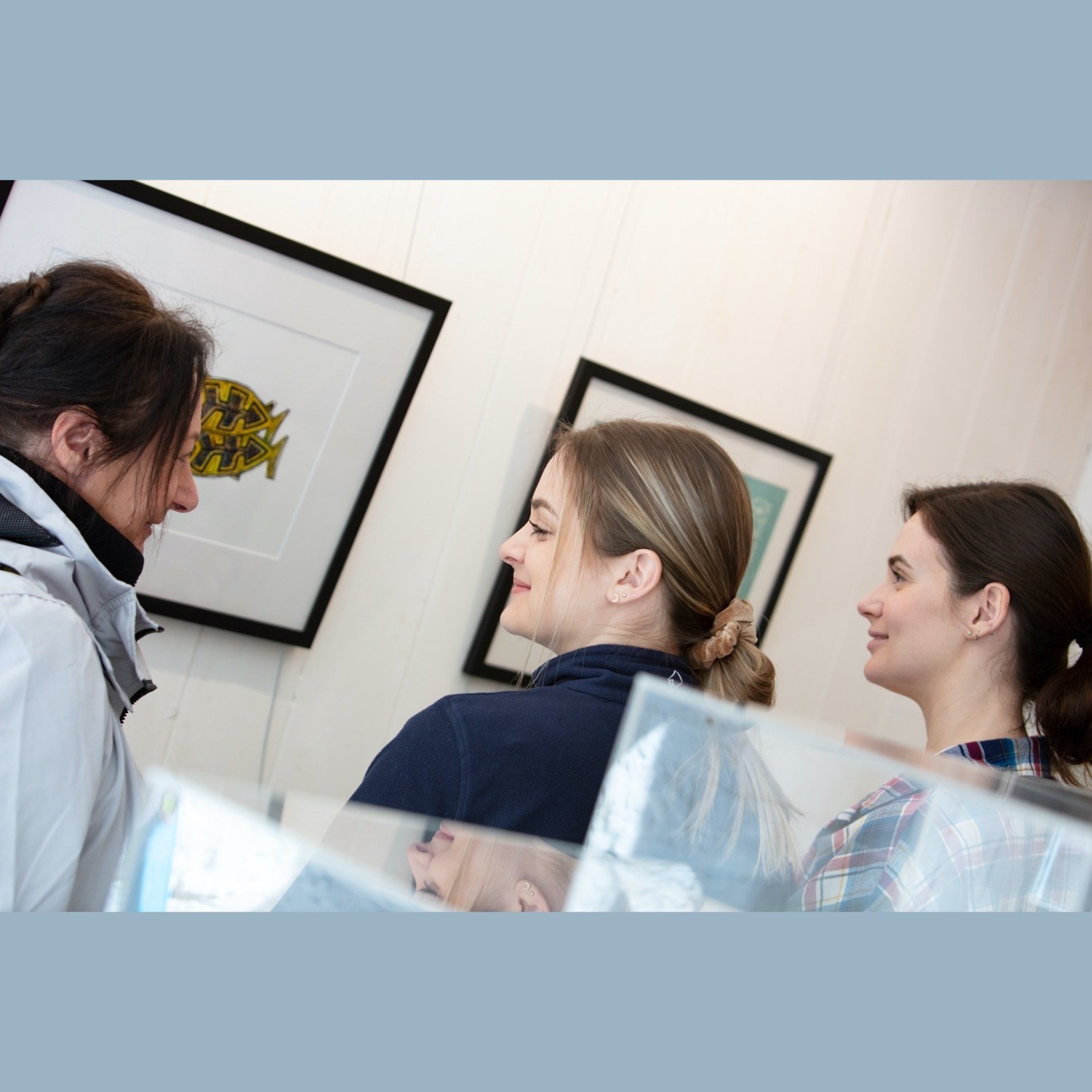
Eastgate Studio Gallery
Sales
If you sell your work at the exhibition, you will be advised by email.
Payment to artists for works sold during the exhibition will be processed weekly.
If your work is for sale and is sold, Eastgate Gallery will take a 45% commission on the sale price. If you submit a framed work you must sell the work framed as exhibited.
Delivery, Install and Collection
The artist is responsible for all transport and associated costs to and from Eastgate Studio.
Prints(s) must be delivered to Eastgate Studio by Sunday 16th October and collected (if not sold) on by Saturday 28th January 2023.
If you are unable to deliver or collect your work during the allocated timeframes please get in touch with us so that we can make appropriate arrangements.
Framing

Claire Charge of “Claire’s Frames”
All pictures exhibited at Eastgate Studio are hung using STAS Gallery System. Please attach D rings for picture hanging 1/3 down the picture frame.
Please complete a label for each print or item submitted. This information should match that given on your submission form.
Restrictions
Artists must make email submissions ONLY. We will not accept postal entries or entries made directly to the Studio.

Eastgate Studio Gallery Exhibition
Key dates for Eastgate Studio Open Print Exhibition Winter 2022
Sun 16th October: Final date for all entries;
Sat 1st October – Sun 16th October: 11am-3pm: delivery of framed and unframed prints to Eastgate Studio. Email eastgateprintstudio@gmail.com for alternative times;
Tues 18th October – Fri 21st October: Set up week;
Sat 22nd October: 1pm – 4pm preview of “Less is More” Exhibition. Join us for the celebration of our winter exhibition;
Mon 24th October – Fri 28th October: Eastgate Studio closed for half-term holiday;
Sat 29th October": “Less is More” Open Print Exhibition opens at 11 Eastgate, Beverley, East Yorkshire HU17 0DR;
Sat 14th Jan 2023": Eastgate Open Print Exhibition closes;
Wed 23rd Jan – 4th Feb 2023: Collection of unsold prints.

Susan Leeson and Joseph Cox

Eastgate Studio Gallery Exhibition Preview
Summertime at Eastgate Studio
Summertime Exhibition at Eastgate Studio
Two fantastic exhibitions are taking place at the studio gallery this summer:
Carol Nunan’s “Inspired by the Wild Things” exhibition has been extended to Wednesday 24th August. Thank you so much to those of you who attended Carol’s preview. She commented on how much she enjoyed meeting you all, particularly because your interest was in her collagraph making techniques as well as the content of her work.
Susan’s been demonstrating collagraph printmaking in the gallery surrounded by these stunning original prints. If you haven’t visited yet, drop in – you too will soon be collecting scraps of wallpaper and other textured materials to create your own collagraph boards. Carol’s work is such an inspiration!
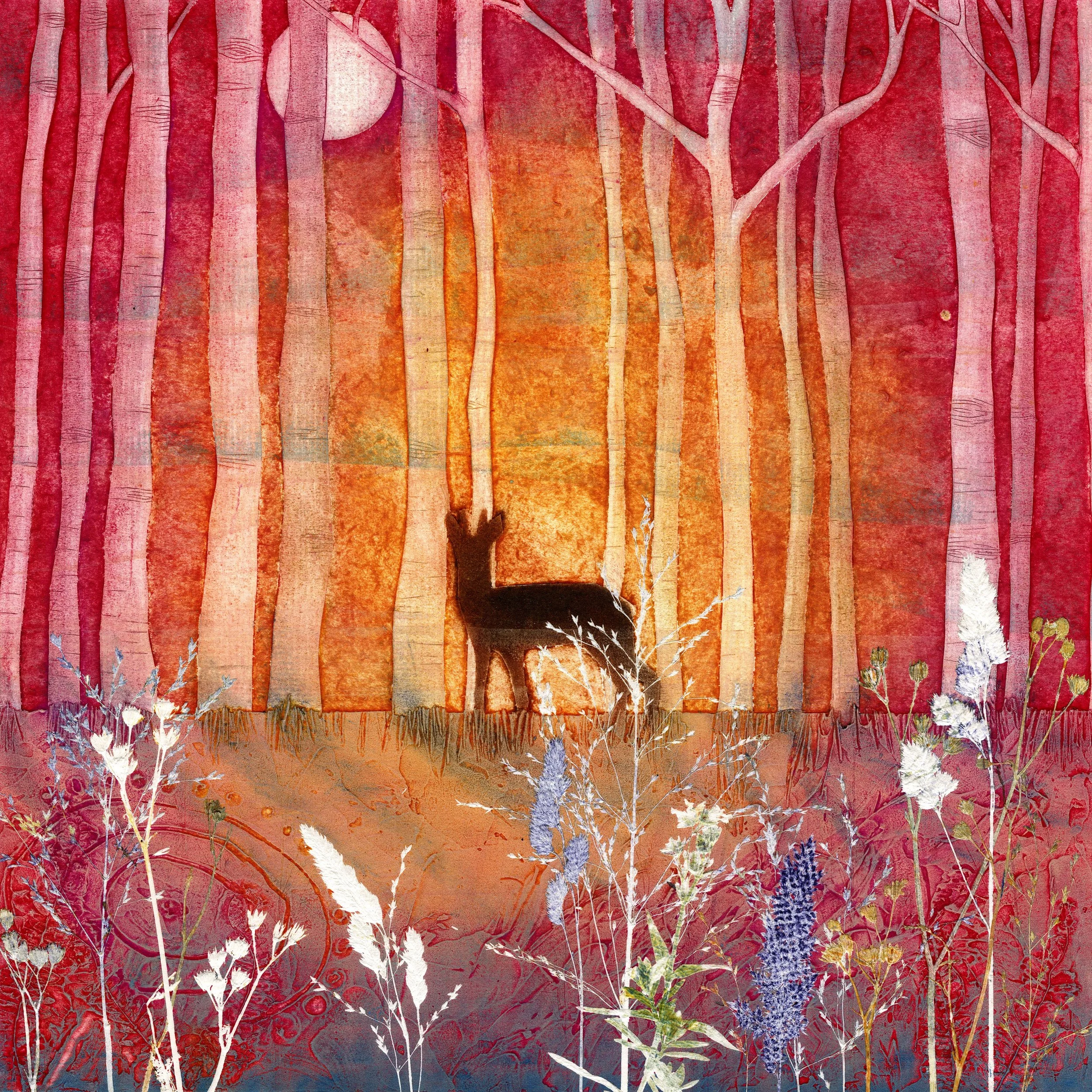
“Startled” collagraph by Carol Nunan
The Land in Danger: Exhibition by the Hull Print Collective Friday 26th August to Saturday 24th September
Hope you can join us for the preview of Hull Print Collective’s “The Land in Danger” Exhibition on Friday 26thAugust from 6pm. It’s always a blast to meet up with these guys!
The exhibited work presents the collective members’ creative response focussing on environmental issues.
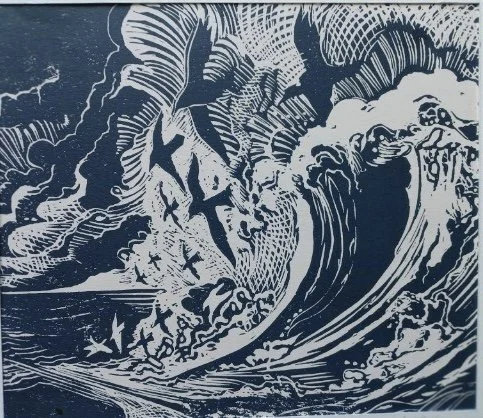
“Flood” linocut by Janet Cox